

Fertility conversations in India are changing rapidly. A decade ago, most couples considered fertility treatment only after facing difficulty conceiving. Today, many young professionals are proactively planning their reproductive future through fertility preservation.
From egg freezing and sperm banking to embryo preservation, fertility preservation is becoming increasingly popular among Indian couples in their 20s and 30s, especially in urban cities like Delhi, Mumbai, Bengaluru, and Hyderabad.
At ARTBaby IVF Centre, specialists are seeing a growing number of individuals and couples seeking fertility counseling earlier than ever before. This shift reflects greater awareness, changing lifestyles, career priorities, delayed parenthood, and advances in reproductive medicine.
What Is Fertility Preservation?
Fertility preservation refers to medical techniques used to protect a person’s ability to have biological children in the future.
Common fertility preservation methods include:
- Egg freezing (oocyte cryopreservation)
- Sperm freezing
- Embryo freezing
- Ovarian tissue preservation (in selected cases)
These technologies allow couples or individuals to preserve healthy reproductive cells at a younger age, when fertility potential is generally higher.
Why Indian Couples Are Thinking About Fertility Earlier
1. Delayed Parenthood Is Increasing
Many Indian couples today are choosing to marry later or postpone pregnancy due to:
- Career goals
- Financial planning
- Higher education
- Late urban marriages
- Personal lifestyle choices
While these changes reflect social progress, fertility naturally declines with age — especially in women after 35.
According to fertility experts and data from Indian reproductive health organizations, age-related fertility decline is becoming one of the leading reasons couples seek IVF treatment later in life.
This has encouraged younger couples to consider fertility preservation as a proactive step rather than an emergency solution.
Understanding Age and Fertility
Female fertility gradually declines with age because both the number and quality of eggs reduce over time.
In women:
- Fertility starts gradually declining after 30
- Decline becomes faster after 35
- Risk of miscarriage and chromosomal abnormalities increases with age
In men:
Male fertility also changes over time due to:
- Reduced sperm quality
- DNA fragmentation
- Lifestyle-related health conditions
- Stress and environmental exposure
This is why many fertility specialists now recommend earlier fertility assessment and planning.
Lifestyle Factors Affecting Fertility in Young Indians
Modern lifestyle habits are significantly influencing reproductive health among younger Indians.
Common contributing factors include:
- Chronic stress
- Sedentary work culture
- Poor sleep patterns
- Smoking and alcohol consumption
- Obesity
- Exposure to pollution
- Processed food habits
Medical conditions such as:
- PCOS (Polycystic Ovary Syndrome)
- Endometriosis
- Fibroids
- Thyroid disorders
- Diabetes
are also affecting fertility at younger ages.
Many couples in their late 20s now experience fertility concerns previously more common in the late 30s.
Why Egg Freezing Is Becoming Popular in India
Egg freezing is one of the fastest-growing fertility preservation treatments in India.
The process involves:
- Ovarian stimulation
- Egg retrieval
- Freezing mature eggs using vitrification technology
Women may later use these eggs during IVF treatment when they are ready for pregnancy.
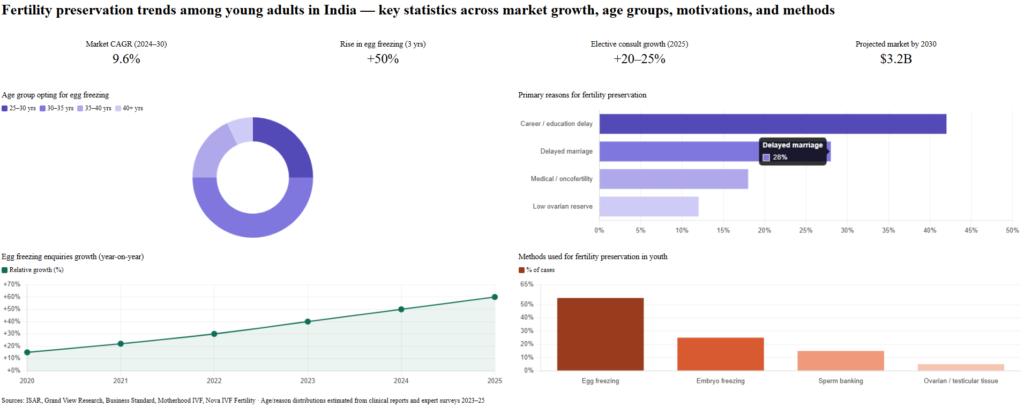
Who commonly chooses egg freezing?
- Career-focused women
- Women delaying marriage
- Women with low ovarian reserve
- Cancer patients before chemotherapy
- Women with family history of early menopause
- Women undergoing fertility-impacting surgeries
Improved freezing technology has significantly increased egg survival and pregnancy outcomes in recent years.
Embryo Freezing for Couples
Many married couples choose embryo freezing instead of egg freezing.
In this process:
- Eggs are fertilized with sperm through IVF
- Healthy embryos are frozen for future use
Embryo preservation may offer:
- Better future planning
- Reduced pressure for immediate pregnancy
- Higher flexibility for family timing
At advanced fertility centers like ARTBaby IVF Centre, embryo freezing protocols follow modern cryopreservation standards to support long-term embryo viability.
Fertility Preservation before Medical Treatment
Fertility preservation is especially important for patients diagnosed with conditions requiring treatments that may affect reproductive health.
These include:
- Cancer therapies
- Chemotherapy
- Radiation treatment
- Autoimmune disorders
- Certain surgeries
Young patients are increasingly consulting fertility specialists before starting medical treatment to preserve future parenthood options.
Rising Awareness among Indian Men
Male fertility awareness is also improving in India.
Many men are now choosing sperm freezing before:
- Cancer treatment
- Delayed parenthood
- International relocation
- High-risk occupations
- Vasectomy procedures
Growing awareness that male fertility also declines with age is helping normalize fertility preservation discussions among couples.
Emotional Benefits of Fertility Preservation
Fertility preservation is not only medical it can also reduce emotional pressure.
Many couples report feeling:
- More confident about future planning
- Less anxious about biological timelines
- Better prepared for career and family balance
While fertility preservation does not guarantee future pregnancy, it may improve reproductive options later in life.
Is Fertility Preservation Right for Everyone?
Not everyone needs fertility preservation. However, fertility counseling can help individuals understand their reproductive health early.
A fertility evaluation may include:
- AMH testing
- Ultrasound assessment
- Hormonal profiling
- Semen analysis
- Ovarian reserve testing
Early awareness allows couples to make informed reproductive decisions rather than waiting until fertility challenges become more complex.
Fertility Preservation Trends in India in 2026
India’s fertility care landscape is evolving rapidly.
Key trends include:
- Increased acceptance of egg freezing
- More awareness in Tier II cities
- Better IVF laboratory technology
- Improved cryopreservation systems
- Greater fertility education through digital platforms
- Growing focus on preventive fertility planning
Young Indians are increasingly viewing fertility preservation as part of long-term health and life planning, similar to financial or career planning.
How ARTBaby Supports Fertility Preservation?
At ARTBaby IVF Centre, fertility preservation programs are designed to provide personalized reproductive guidance based on age, medical history, and future family goals.
Services may include:
- Egg freezing
- Embryo freezing
- Fertility evaluation
- IVF consultation
- Reproductive health counseling
The focus is on evidence-based fertility care, patient education, and individualized treatment planning for Indian couples.
Final Thoughts
Fertility preservation is no longer limited to celebrities or medical emergencies. In 2026, more Indian couples are choosing to plan ahead and protect their reproductive future earlier in life.
With delayed parenthood, rising infertility rates, and increasing awareness about age-related fertility decline, fertility preservation is becoming an important part of modern reproductive healthcare in India.
Understanding fertility early empowers couples to make informed, confident decisions about when and how they want to build their family in the future.
