
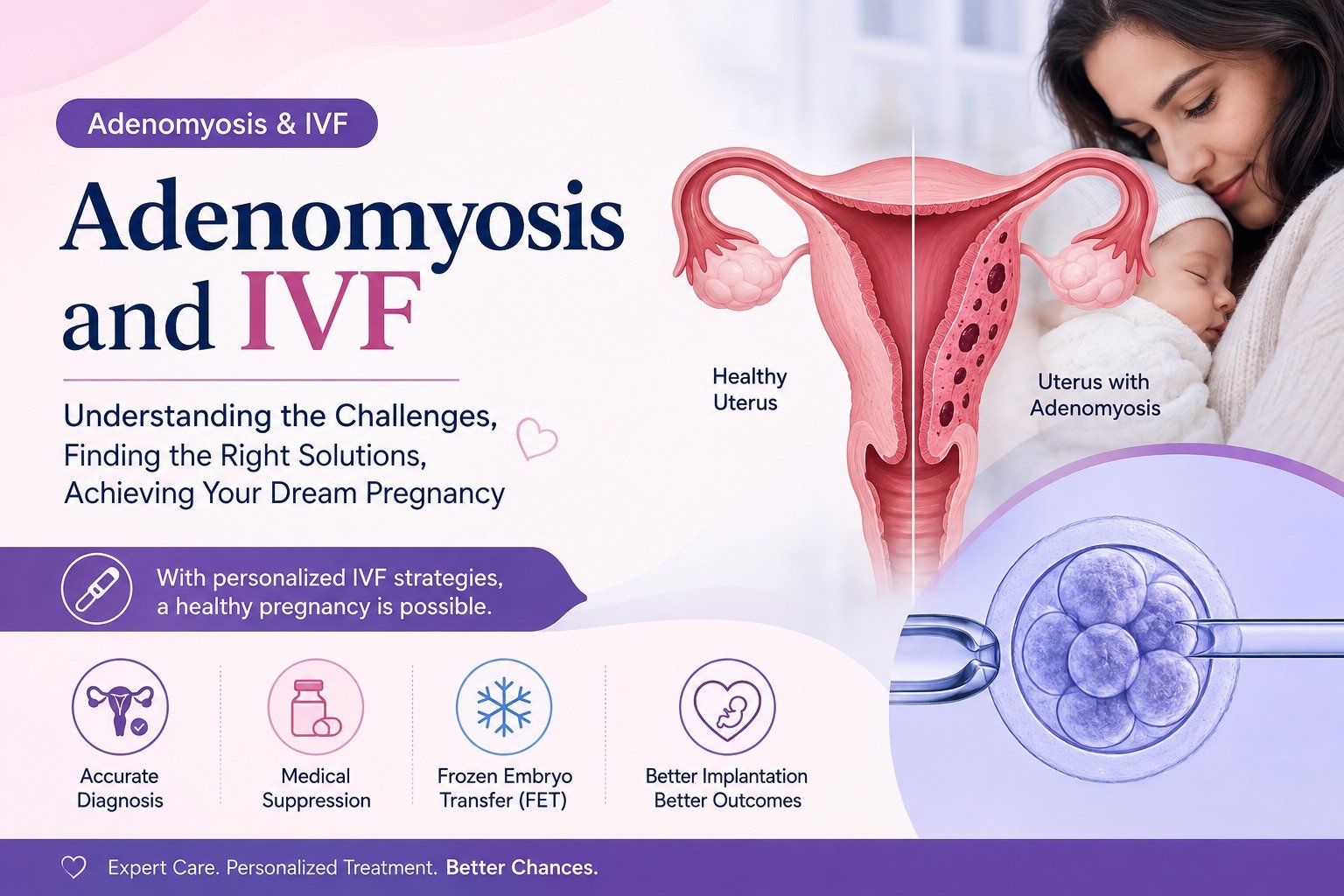
Navigating fertility challenges can feel overwhelming, especially when diagnosed with a condition like adenomyosis. If you have been told that adenomyosis might impact your fertility, you likely have many questions: Does this mean I can’t get pregnant? Will IVF still work for me? How can I protect my chances of carrying a healthy baby to term?
The short answer is yes, you can still achieve a healthy pregnancy with adenomyosis through In Vitro Fertilization (IVF). While adenomyosis adds a layer of complexity, targeted medical strategies and tailored treatment protocol adjustments allow many women with this condition to successfully conceive and carry healthy babies.
What Is Adenomyosis?
To understand how adenomyosis affects fertility, it helps to picture the structure of the uterus.
The uterus consists of two main layers:
- The Endometrium: The inner lining that thickens every month and sheds during your period (or holds an embryo during pregnancy).
- The Myometrium: The surrounding thick muscle wall that contracts during labor.
In a healthy uterus, there is an important border separating the inner lining from the muscle wall called the Junctional Zone. Think of it as an invisible protective barrier that keeps the endometrial lining strictly contained inside the uterine cavity where it belongs.
In adenomyosis, that protective boundary (the Junctional Zone) weakens and breaks down. When this happens, small bits of the inner lining burrow through the broken barrier and sink directly into the surrounding muscle wall. Instead of staying neatly on the surface where they belong, these tiny “islands” of lining tissue get trapped deep inside the muscle itself.
Every month during your menstrual cycle, this misplaced tissue behaves like normal lining. It thickens, breaks down, and bleeds. Because the blood has nowhere to go within the muscle wall, it leads to chronic inflammation, localized swelling, severe cramps, and heavy or prolonged bleeding.
Comparison
| Feature | Healthy Uterus | Uterus with Adenomyosis |
| Boundary | Intact Junctional Zone separates lining from muscle. | Disrupted boundary; lining tissue burrows into muscle. |
| Location of Blood | Sheds cleanly out through the cervix as a normal period. | Blood gets trapped inside the muscle wall with no escape route. |
| Uterine Structure | Normal size, flexible, and firm. | Enlarged, swollen, inflamed, and often tender or “bogy.” |
| Common Symptoms | Manageable cramping and normal bleeding flow. | Heavy/prolonged bleeding, deep pelvic pain, and severe dysmenorrhea (painful periods). |
Why Adenomyosis Causes Pain, Heavy Bleeding, and Swelling
The real problem isn’t just that the tissue moved, but it’s that the misplaced tissue still acts like uterine lining, no matter where it is located.
Even though these tissue islands are trapped inside the muscle wall, they still respond to your monthly hormonal cycle:
- Estrogen Rises: During the first half of your cycle, the trapped tissue inside the muscle wall thickens and expands, just like the lining inside your uterus does.
- Hormones Drop: During your period, the trapped tissue attempts to bleed, just like your normal period.
- No Way Out: Unlike normal menstrual blood that easily flows out through the cervix, this blood and fluid has nowhere to escape because it is completely surrounded by solid muscle.
How Does Adenomyosis Affect IVF and Fertility?
Adenomyosis can influence fertility and the outcome of IVF treatments in a few specific ways:
- Altered Uterine Environment: The chronic inflammation caused by misplaced tissue makes the uterine lining less receptive to an embryo.
- Impaired Embryo Implantation: Inflammation and subtle structural changes in the uterine wall can make it harder for an embryo to attach securely.
- Disrupted Uterine Contractions: A healthy uterus exhibits subtle, rhythmic waves that help transport sperm and position an embryo. Adenomyosis can cause irregular muscular contractions, potentially interfering with early implantation.
- Increased Risk of Early Pregnancy Loss: Studies published by the National Institutes of Health (NIH) indicate that untreated adenomyosis can slightly elevate the risk of miscarriage or early pregnancy complications due to reduced uterine elasticity and local inflammatory responses.
How Tailored IVF Protocols Help You Succeed
Having adenomyosis does not mean IVF won’t work. It simply means a standard approach may need adjustment. Reproductive specialists use targeted strategies to calm the uterine environment before introducing an embryo.
Key Medical Strategies to Improve Success:
- Down-Regulation (Medical Suppression): Before performing an embryo transfer, specialists often prescribe a course of GnRH agonists (such as Lupron or Decapeptyl) for 1 to 3 months. This temporarily lowers estrogen levels, which shrinks adenomyotic lesions and significantly reduces uterine inflammation.
- Frozen Embryo Transfer (FET) Strategy: Instead of transferring an embryo during a fresh IVF cycle when hormone levels are high from ovarian stimulation, doctors often freeze high-grade embryos. They perform the transfer later in a calm, pre-treated uterine environment.
- Anti-Inflammatory Therapies: Adjunctive treatments, including targeted protocols or supportive anti-inflammatory medications, help optimize the endometrial lining receptive window.
What Steps Should You Take Next?
If you are planning an IVF journey with adenomyosis, here is how you can take control of your treatment path:
- Get an Accurate Assessment:
Diagnostic Imaging: Ensure your fertility team performs high-resolution transvaginal 3D ultrasound or an MRI. Precise mapping shows whether your adenomyosis is focal (in one spot) or diffuse (spread across the muscle), which helps guide your treatment protocol design.
- Discuss Pre-Transfer Suppression:
Medical Consultation: Ask your specialist whether a 1–3-month downregulation protocol before Frozen Embryo Transfer (FET) is appropriate for your specific case.
- Optimize Overall Pelvic Health:
Lifestyle Support: Adopt an anti-inflammatory diet rich in antioxidants, manage stress levels, and work closely with your medical team to manage symptoms like heavy bleeding or pelvic pain before treatment.
A Note of Reassurance: Thousands of women with adenomyosis have successfully carried pregnancies through modern IVF care. With personalized pre-treatment strategies and expert monitoring, a healthy pregnancy is well within reach.
Disclaimer
This blog is for educational purposes only and does not replace personalized medical advice. Please consult ARTBaby fertility specialists for individual assessment and treatment planning.
