
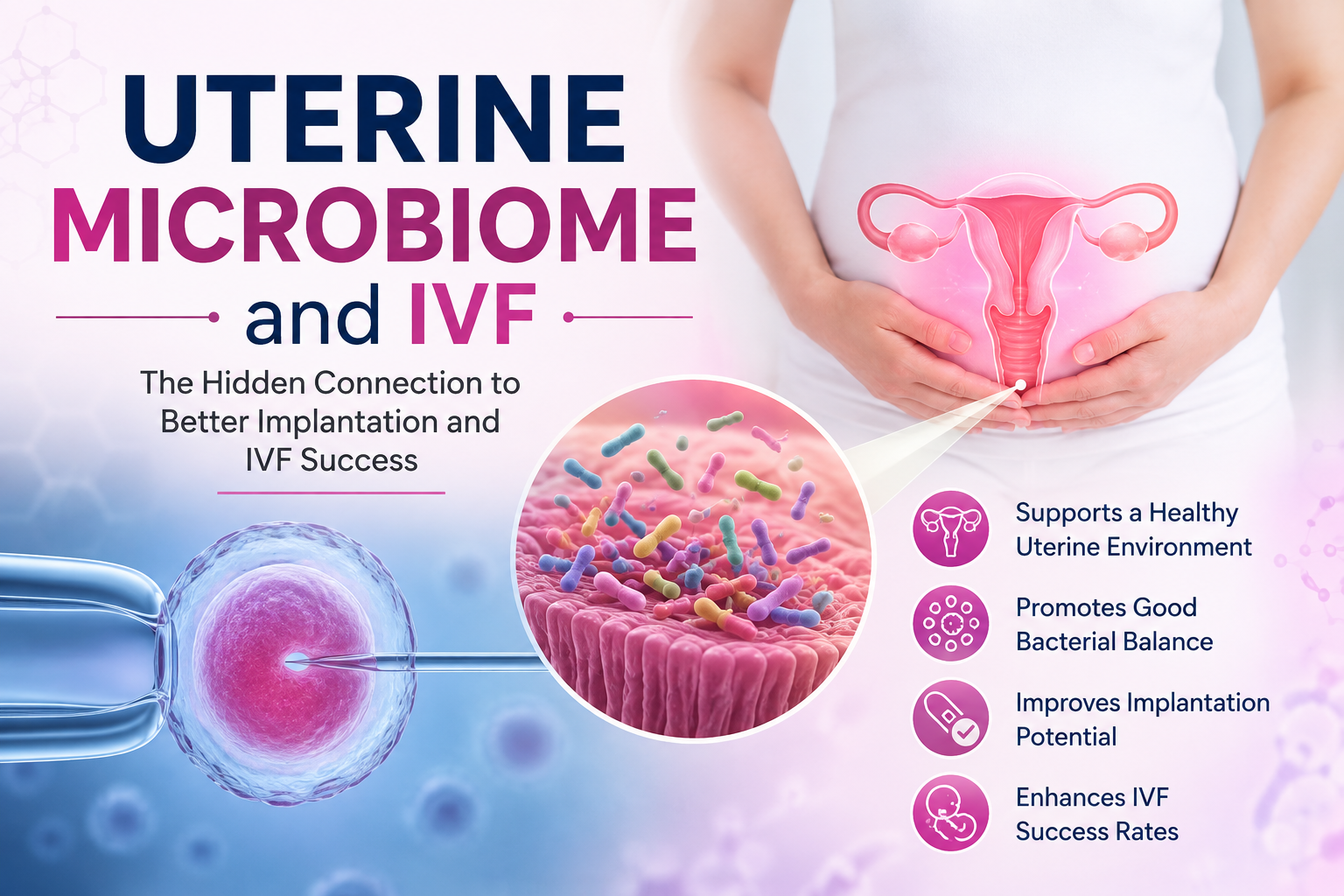
Can Your Uterine Microbiome Affect IVF Success? What New Research Shows
Infertility is not always about egg quality, sperm health, or hormone levels. Researchers are increasingly exploring another important factor that may influence IVF outcomes: the uterine (endometrial) microbiome.
Although once believed to be sterile, the uterus is now known to contain a small community of microorganisms. Emerging evidence suggests that the balance of these microbes, particularly the presence of beneficial Lactobacillus species, may influence implantation and early pregnancy. However, this field is still evolving, and many questions remain unanswered.
For couples planning IVF in India, understanding the science behind the uterine microbiome can help them have informed discussions with their fertility specialist. At ARTBaby, evidence-based, individualized fertility care remains the cornerstone of successful treatment.
What Is the Uterine Microbiome?
The uterine microbiome refers to the collection of bacteria naturally present within the endometrium the inner lining of the uterus where embryo implantation occurs.
Unlike the gut microbiome, the uterine microbiome contains relatively few bacteria. Even so, researchers believe these microorganisms may interact with the immune system, influence inflammation, and contribute to endometrial receptivity during embryo implantation.
Why Is the Endometrial Microbiome Important in IVF?
Successful IVF depends on three major factors:
- A healthy embryo
- A receptive endometrium
- Proper synchronization between embryo and uterus
The endometrial microbiome may affect this third component by influencing the environment where implantation occurs.
Researchers are studying whether microbial imbalance contributes to:
- Implantation failure
- Recurrent IVF failure
- Chronic low-grade inflammation
- Poor endometrial receptivity
- Early pregnancy loss
While these associations are promising, experts agree that microbiome testing has not yet become a standard part of IVF evaluation for all patients because evidence is still developing.
Lactobacillus Dominance: Why Does It Matter?
One of the most discussed findings in reproductive microbiome research is Lactobacillus dominance.
Lactobacillus species are considered beneficial because they help:
- Maintain an acidic environment
- Limit growth of harmful bacteria
- Reduce inflammation
- Support immune balance within the reproductive tract
Several studies have found that women whose endometrial microbiome is predominantly composed of Lactobacillus may experience better implantation and pregnancy outcomes than those with lower Lactobacillus levels. However, researchers caution that results are not completely consistent across studies.
What Is Dysbiosis?
Dysbiosis means an imbalance in the normal microbial community.
Instead of beneficial bacteria dominating, other microorganisms may become more abundant, including species associated with inflammation.
Researchers have linked dysbiosis with:
- Reduced implantation rates
- Altered immune responses
- Increased inflammatory markers
- Possible chronic endometritis
- Lower IVF success in some patient groups
However, dysbiosis alone does not necessarily cause infertility, and many women with microbial imbalance still achieve successful pregnancies.
Can the Uterine Microbiome Cause IVF Failure?
Not directly.
IVF success depends on many interconnected factors, including:
- Female age
- Embryo quality
- Genetic health of embryos
- Endometrial thickness
- Hormonal balance
- Male fertility
- Uterine abnormalities
- Lifestyle factors
The microbiome appears to be one possible contributor rather than the sole cause of implantation failure.
Current evidence suggests it should be considered as part of a comprehensive fertility evaluation rather than an isolated explanation.
When Might Microbiome Testing Be Considered?
Routine microbiome testing is not recommended for every IVF patient.
Some fertility specialists may consider additional evaluation in selected situations, such as:
- Recurrent implantation failure
- Multiple unsuccessful IVF cycles
- Recurrent miscarriage
- Suspected chronic endometritis
- Persistent vaginal infections
- Unexplained infertility after standard investigations
The decision should always be individualized based on clinical history.
How Is the Endometrial Microbiome Evaluated?
Specialized fertility centres may use molecular techniques such as:
- Endometrial sampling
- Next-generation sequencing (NGS)
- 16S rRNA sequencing
These tests identify the types and proportions of bacteria present in the endometrium.
Because testing methods and interpretation vary between laboratories, there is currently no universal international standard for defining an “ideal” uterine microbiome.
Can the Microbiome Be Improved?
This is one of the most active areas of fertility research.
Depending on the underlying findings, specialists may recommend:
- Appropriate treatment for confirmed infections
- Management of chronic endometritis
- Selected antibiotics when clinically indicated
- Vaginal probiotics in carefully chosen cases
- Lifestyle measures supporting vaginal health
Importantly, self-medicating with probiotics or antibiotics is not recommended, as unnecessary treatment may further disturb the microbial balance.
A 2025 systematic review found that vaginal probiotics show promise as an adjunct before embryo transfer, but larger, high-quality clinical trials are still needed before routine use can be recommended.
What Does the Latest Research Say?
Recent research has expanded our understanding of the reproductive microbiome.
Current findings suggest:
- The uterus has its own distinct microbial ecosystem.
- Lactobacillus-rich communities may support implantation in some women.
- Dysbiosis may be associated with poorer reproductive outcomes.
- The microbiome likely interacts with immune and inflammatory pathways affecting endometrial receptivity.
- More randomized clinical trials are needed before microbiome-directed treatments become standard IVF practice.
Why This Matters for Indian IVF Patients
India is witnessing increasing rates of infertility due to delayed parenthood, PCOS, endometriosis, obesity, diabetes, environmental exposures, and lifestyle-related stress.
As fertility medicine advances, clinicians are moving beyond conventional investigations to understand subtle biological factors that may influence implantation.
For selected patients, particularly those with repeated IVF failures the uterine microbiome may become one additional piece of the diagnostic puzzle. However, decisions should always be guided by scientific evidence and specialist evaluation rather than trends.
How ARTBaby Supports Evidence-Based Fertility Care
At ARTBaby, fertility treatment is individualized rather than one-size-fits-all.
Depending on each patient’s history, specialists may evaluate:
- Hormonal profile
- Ovarian reserve
- Male fertility
- Uterine health
- Genetic factors where appropriate
- Advanced investigations for recurrent IVF failure when clinically indicated
As reproductive medicine evolves, ARTBaby continues to follow emerging scientific evidence while ensuring that every recommendation is supported by current clinical guidelines and patient-specific needs.
Frequently Asked Questions
Does everyone undergoing IVF need microbiome testing?
No. Most patients achieve successful IVF without it. Testing is generally reserved for selected clinical situations.
Can probiotics improve IVF success?
Current evidence is encouraging but not conclusive. Probiotics should only be used under medical supervision.
Is Lactobacillus always beneficial?
Lactobacillus dominance is generally associated with a healthier reproductive environment, but fertility depends on many factors beyond bacterial composition.
Is the uterine microbiome research settled?
No. It remains an exciting and rapidly evolving area of reproductive medicine. Larger studies are still needed before routine testing and treatment become standard practice.
Final Thoughts
The uterine microbiome represents one of the most promising frontiers in fertility medicine. Research suggests that a healthy, balanced endometrial environment, particularly one enriched with beneficial Lactobacillus species, may support embryo implantation in some women. However, the science is still evolving, and microbiome testing is not yet recommended as a routine investigation for all IVF patients.
For couples facing repeated implantation failure or unexplained infertility, discussing emerging diagnostic options with an experienced fertility specialist may help identify individualized strategies. At ARTBaby, every treatment plan is guided by evidence-based medicine, comprehensive evaluation, and personalized care to maximize the chances of a healthy pregnancy.
Medically Reviewed By
Reviewed by: DR. Sheweta Mishra Choudhary
Fertility & IVF Specialist
ARTbaby IVF Centre, New Delhi
References:
