
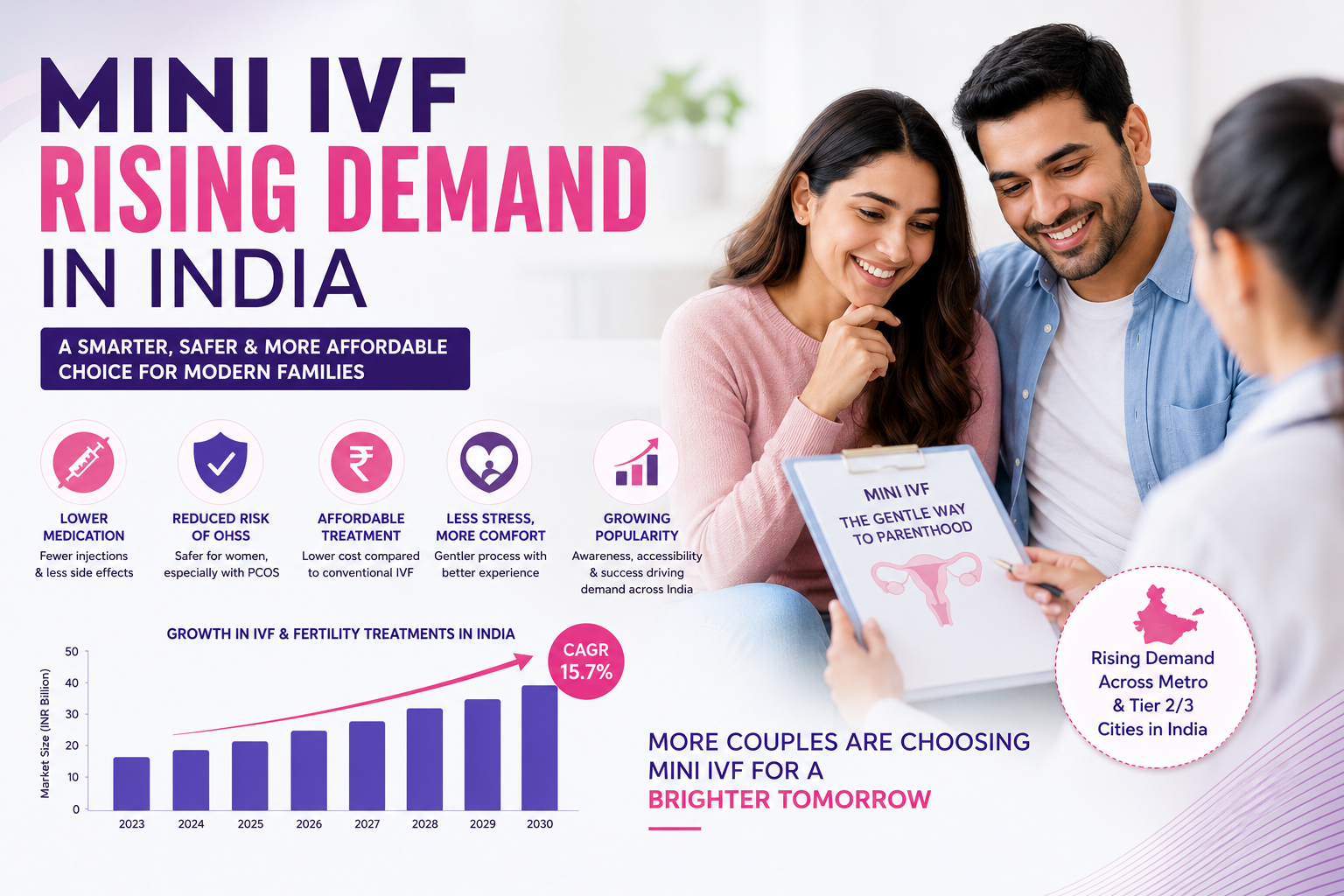
Infertility is becoming increasingly common in India. Delayed parenthood, lifestyle-related conditions, stress, environmental factors, and reproductive disorders such as PCOS and endometriosis have contributed to a growing demand for fertility treatment.
While conventional IVF remains the most widely used assisted reproductive technology, many couples are now asking a different question:
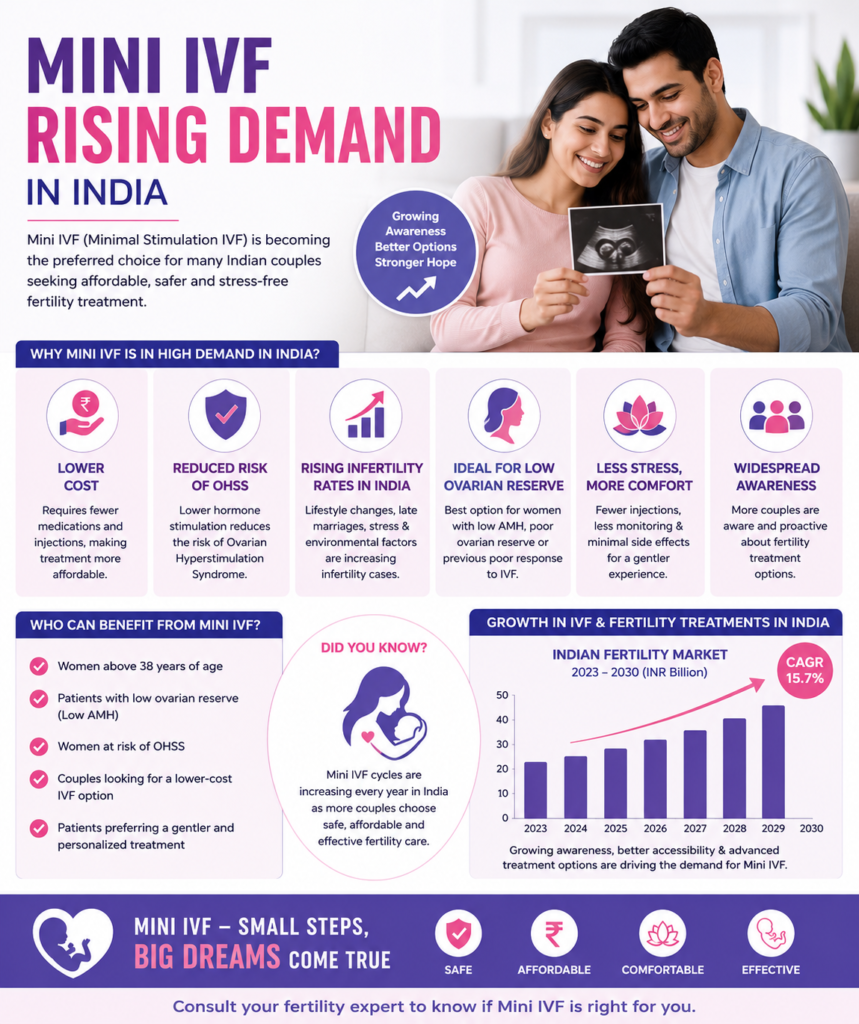
Can IVF be effective with fewer medications, lower costs, and less physical stress?
This growing interest has brought Mini IVF, also known as Minimal Stimulation IVF, into the spotlight.
At ARTBaby, we believe that fertility treatment should be personalized rather than following a one-size-fits-all approach. For some patients, Mini IVF may offer an effective alternative that balances comfort, affordability, and clinical outcomes.
What Is Mini IVF?
Mini IVF uses lower doses of fertility medications compared to conventional IVF. Instead of stimulating the ovaries to produce a large number of eggs, Mini IVF focuses on obtaining a smaller number of high-quality eggs through a gentler stimulation protocol. The goal is not necessarily to retrieve the maximum number of eggs but to optimize egg quality while reducing medication exposure.
Conventional IVF vs Mini IVF
| Feature | Conventional IVF | Mini IVF |
| Hormone dosage | High | Low |
| Number of injections | More | Fewer |
| Egg retrieval target | Many eggs | Fewer eggs |
| Medication cost | Higher | Lower |
| Risk of OHSS | Higher | Lower |
| Patient discomfort | Greater | Reduced |
Why Is Mini IVF Gaining Popularity in India?
Several factors are driving interest in Mini IVF across India.
1. Lower Treatment Cost
IVF treatment expenses can be a concern for many couples.
Since Mini IVF uses significantly fewer fertility medications, the overall treatment cost may be reduced.
This can be particularly valuable for:
- Young couples paying out-of-pocket
- Patients requiring multiple IVF cycles
- Couples from Tier-II and Tier-III cities
- Individuals seeking more affordable fertility options
2. Reduced Medication Burden
Many women are apprehensive about daily injections and the side effects associated with high-dose ovarian stimulation.
Mini IVF generally involves:
- Fewer injections
- Lower hormone exposure
- Reduced bloating
- Improved treatment comfort
This makes the process less physically demanding for many patients.
3. Lower Risk of Ovarian Hyperstimulation Syndrome (OHSS)
OHSS is a known complication of fertility treatment, particularly among women with:
- PCOS
- High ovarian reserve
- Elevated AMH levels
Because Mini IVF uses lower stimulation doses, the risk of OHSS is generally lower compared with conventional IVF.
Who May Benefit from Mini IVF?
Mini IVF is not suitable for every patient. Success depends on individual fertility factors.
Potential candidates include:
Women with Low Ovarian Reserve
Patients with diminished ovarian reserve may not produce large numbers of eggs even with high-dose stimulation.
In such cases, aggressive medication may offer limited additional benefit.
Women Sensitive to Hormonal Medications
Some patients experience significant side effects during conventional stimulation.
Mini IVF may provide a gentler treatment experience.
Patients with PCOS
Selected PCOS patients may benefit from lower stimulation protocols under careful specialist supervision.
Couples Seeking Cost-Conscious Fertility Treatment
Mini IVF may reduce medication expenses while still providing an opportunity for pregnancy.
Can Fewer Eggs Still Lead to Pregnancy?
One of the biggest misconceptions about IVF is that more eggs automatically mean higher success rates.
While having more eggs can increase the number of embryos available for selection, embryo quality remains critical.
Recent fertility research increasingly emphasizes:
- Egg quality
- Embryo quality
- Endometrial receptivity
- Genetic health
- Laboratory standards
A smaller number of healthy embryos may sometimes provide outcomes comparable to larger egg retrievals, depending on the patient’s age and fertility profile.
What Does the Treatment Process Look Like?
A Mini IVF cycle generally includes:
Step 1: Fertility Evaluation
- Hormonal testing
- AMH assessment
- Ultrasound examination
- Semen analysis
Step 2: Mild Ovarian Stimulation
Lower-dose fertility medications are administered for a shorter duration.
Step 3: Monitoring
Regular ultrasounds track follicle development.
Step 4: Egg Retrieval
Mature eggs are collected through a minimally invasive procedure.
Step 5: Fertilization
Eggs are fertilized using IVF or ICSI techniques.
Step 6: Embryo Transfer
Selected embryos are transferred or frozen for future use.
What Are the Limitations of Mini IVF?
While Mini IVF offers several advantages, patients should understand its limitations.
Fewer Eggs Retrieved
A lower egg count may reduce the number of embryos available for future transfers.
Not Ideal for Every Age Group
Women over 40 may require individualized assessment to determine whether Mini IVF is appropriate.
Multiple Cycles May Be Needed
Some patients may require additional cycles to accumulate embryos.
For this reason, fertility specialists must carefully evaluate each patient’s reproductive profile before recommending treatment.
Emerging Trends in Mini IVF for 2026
The future of fertility treatment is increasingly focused on personalization.
Several developments are helping improve outcomes with minimal stimulation approaches:
Data-Driven Treatment Planning
Advanced fertility analytics help physicians customize stimulation protocols based on:
- Age
- AMH levels
- Previous IVF history
- Ovarian response patterns
Improved Embryo Assessment
Time-lapse embryo monitoring allows embryologists to observe embryo development without disturbing culture conditions.
Better Cryopreservation Techniques
Modern vitrification technology enables highly efficient embryo freezing and thawing.
Individualized Medication Protocols
Clinics are moving away from standardized stimulation approaches and toward patient-specific treatment plans.
Mini IVF and the Indian Fertility Landscape
As fertility awareness expands beyond metropolitan cities, many Indian couples are seeking treatment options that are:
- Affordable
- Less invasive
- Evidence-based
- Accessible
Mini IVF aligns with this shift by offering a patient-friendly approach that may reduce both financial and physical burdens.
However, it is important to remember that the “best” IVF protocol varies from person to person. Treatment decisions should always be based on medical evaluation rather than trends alone.
How ARTBaby Supports Personalized Fertility Care
At ARTBaby, fertility treatment begins with understanding the individual rather than applying a standard protocol.
Our fertility specialists evaluate:
- Age and reproductive goals
- Ovarian reserve
- Previous treatment history
- Medical conditions
- Lifestyle factors
This personalized approach helps determine whether conventional IVF, Mini IVF, ICSI, fertility preservation, or another strategy is most appropriate for achieving the best possible outcome.
Final Thoughts
Mini IVF is emerging as an important option within modern fertility care in India. By using lower medication doses and a more patient-friendly approach, it offers potential advantages in comfort, affordability, and safety for selected individuals.
While it may not replace conventional IVF, it reflects a broader movement toward personalized fertility treatment where success is measured not simply by the number of eggs retrieved, but by choosing the right approach for the right patient.
For couples exploring fertility treatment in India, discussing Mini IVF with an experienced fertility specialist can help determine whether this innovative approach fits their reproductive journey.
Reference:
- https://ichelonconsulting.com/insights/ivf-market-india-2025-2030-opportunity
- What is Mini IVF?
- https://www.monashbiotech.com/frequently-asked-questions/how-many-ivf-treatments-are-performed-annually-in-india/
Disclaimer
This article is intended for educational and informational purposes only and should not be considered medical advice. Fertility treatment recommendations vary based on individual medical history, age, reproductive health, and diagnostic findings. Patients should consult a qualified fertility specialist for personalized evaluation and treatment planning.
