
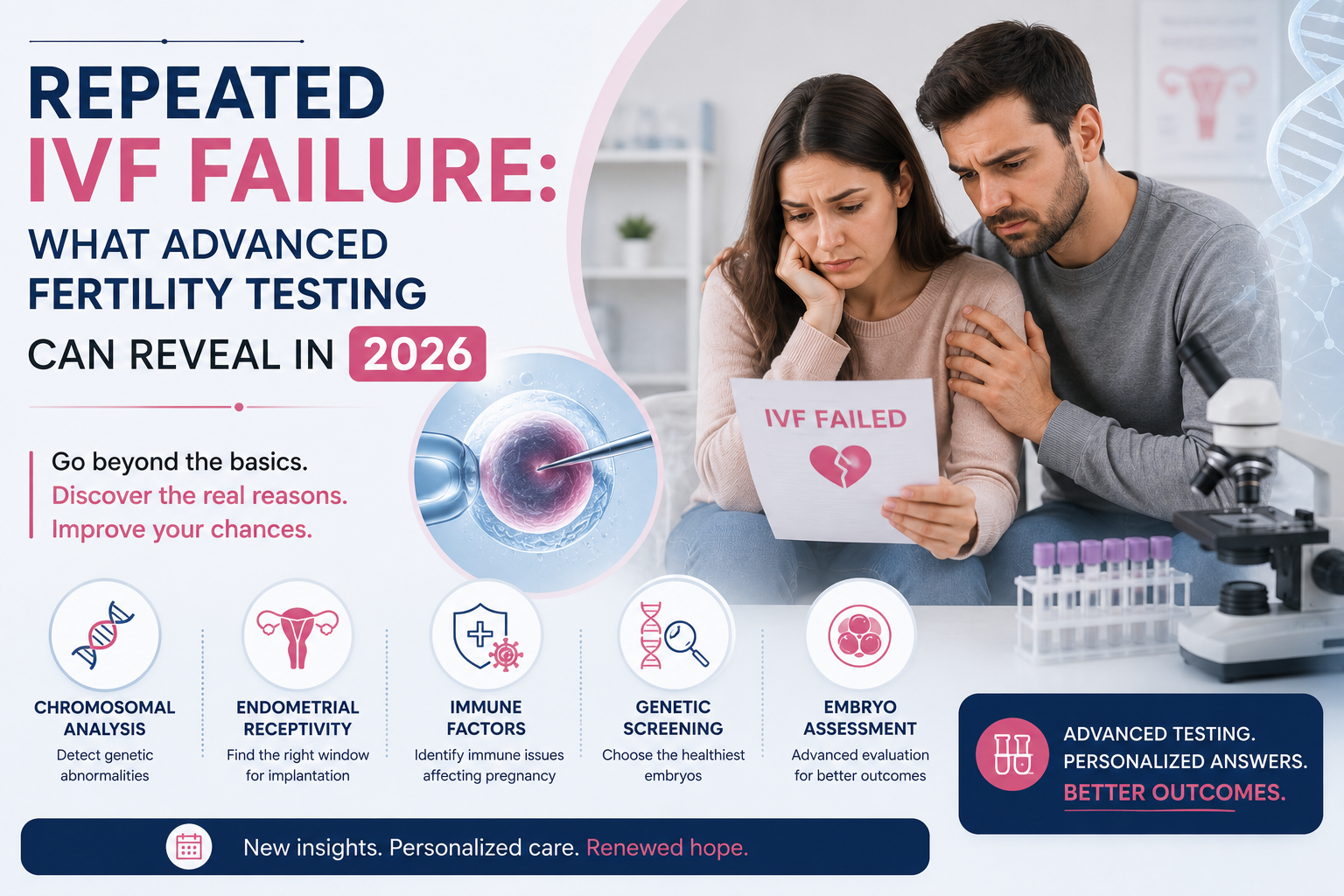
When IVF Doesn’t Work: Understanding the Next Step
Experiencing one failed IVF cycle can be disappointing. Experiencing repeated IVF failures can be emotionally overwhelming and financially stressful. Many couples begin to wonder whether they should continue treatment or explore alternative options.
The good news is that fertility medicine has evolved significantly. In 2026, advanced fertility testing is helping specialists identify hidden factors that may contribute to implantation failure, poor embryo development, miscarriage, or unsuccessful IVF cycles.
At ARTBaby, we believe that every unsuccessful IVF attempt provides valuable clinical information. Modern diagnostic tools can help uncover the underlying causes and support a more personalized treatment strategy.
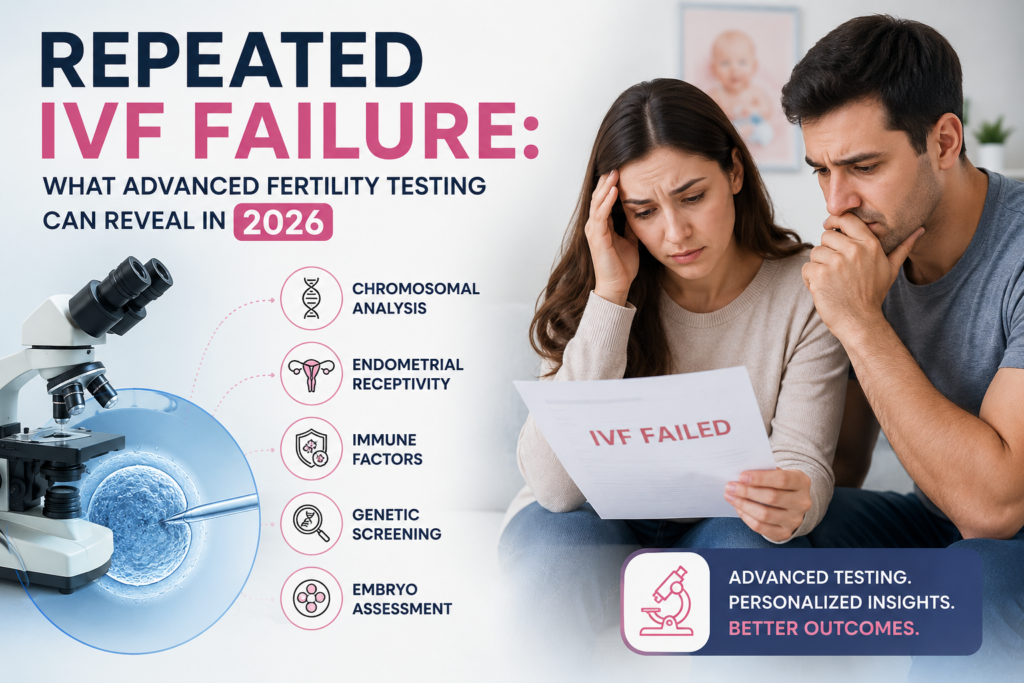
What Is Repeated IVF Failure?
While there is no universally accepted definition, repeated IVF failure generally refers to:
- Failure to achieve pregnancy after multiple IVF cycles
- Repeated embryo transfer failures despite good-quality embryos
- Recurrent implantation failure (RIF)
- Multiple miscarriages following IVF treatment
Not all IVF failures occur for the same reason. Age, embryo quality, genetics, uterine health, sperm factors, immune conditions, and lifestyle influences can all play a role.
This is why advanced testing has become increasingly important in modern fertility care.
Why Traditional IVF Evaluations May Miss Important Clues?
Standard fertility investigations typically assess:
- Ovarian reserve
- Hormone levels
- Semen analysis
- Ultrasound findings
- Tubal status
However, these tests may not identify subtle biological factors affecting implantation or embryo development.
Recent research suggests that a deeper evaluation after repeated IVF failures can help clinicians develop more targeted treatment plans rather than simply repeating the same protocol.
Advanced Fertility Testing in 2026: What Can It Reveal?
- Preimplantation Genetic Testing (PGT)
One of the most significant advances in IVF is genetic screening of embryos before transfer.
PGT helps identify embryos with normal chromosome numbers, reducing the likelihood of transferring embryos that may fail to implant or result in miscarriage.
Benefits may include:
- Improved embryo selection
- Reduced miscarriage risk
- Better outcomes for older women
- More efficient IVF cycles
PGT is particularly useful for:
- Women above 35 years
- Recurrent implantation failure
- Recurrent pregnancy loss
- Severe male factor infertility
- Advanced Sperm DNA Fragmentation Testing
A routine semen analysis evaluates sperm count, movement, and shape. However, sperm may appear normal while carrying significant DNA damage.
Sperm DNA fragmentation testing can identify hidden sperm quality issues associated with:
- Poor embryo development
- Implantation failure
- Recurrent miscarriage
- Lower IVF success rates
Lifestyle factors, smoking, obesity, pollution exposure, diabetes, infections, and age may increase sperm DNA damage.
This is especially relevant in India, where environmental pollution and lifestyle-related health conditions are becoming increasingly common.
- Endometrial Receptivity Assessment
Even when a healthy embryo is transferred, successful implantation depends on whether the uterine lining is ready to receive it.
Advanced endometrial testing evaluates:
- Implantation timing
- Endometrial receptivity
- Gene expression patterns
- Uterine environment
Some women may have a displaced “window of implantation,” meaning embryo transfer occurs too early or too late.
Personalizing transfer timing based on endometrial testing may improve outcomes in selected patients with repeated implantation failure.
- Comprehensive Genetic Screening for Intended Parents
Sometimes underlying genetic variations in either partner may contribute to fertility challenges.
Carrier screening and genetic counseling can identify:
- Inherited genetic conditions
- Chromosomal rearrangements
- Balanced translocations
- Reproductive genetic risks
Understanding these factors allows fertility specialists to design safer and more individualized treatment plans.
- Uterine Health Evaluation
Advanced imaging techniques now provide a more detailed assessment of the uterus than standard ultrasound alone.
Diagnostic tools may include:
- 3D ultrasound
- Hysteroscopy
- Saline infusion sonography
- MRI in selected cases
These evaluations may identify:
- Polyps
- Fibroids
- Scar tissue
- Adenomyosis
- Congenital uterine abnormalities
Even small abnormalities can affect implantation success.
- Evaluation of Endometriosis and Inflammation
Endometriosis affects millions of women worldwide and remains underdiagnosed in India.
Research increasingly shows that endometriosis can influence:
- Egg quality
- Embryo development
- Implantation
- Pregnancy outcomes
Advanced diagnostic approaches may help identify inflammatory conditions that standard fertility evaluations sometimes overlook.
The Growing Role of Data-Driven Fertility Care
One of the most important developments in 2026 is the use of data-driven fertility medicine.
Rather than relying solely on individual test results, fertility specialists increasingly analyze large datasets to understand patterns associated with successful pregnancies.
This approach helps clinicians evaluate:
- Previous IVF cycle performance
- Hormonal responses
- Embryo development trends
- Patient-specific fertility factors
- Treatment protocol effectiveness
Data-driven decision-making supports a more personalized IVF strategy rather than a one-size-fits-all approach.
For couples experiencing repeated IVF failure, this can lead to meaningful treatment modifications that improve future outcomes.
Lifestyle Factors That Should Not Be Ignored
Advanced testing is important, but lifestyle optimization remains a critical part of fertility care.
Factors that may influence IVF success include:
- Obesity
- Poor sleep quality
- Smoking
- Excessive alcohol intake
- Chronic stress
- Uncontrolled diabetes
- Thyroid disorders
- Nutritional deficiencies
Many fertility specialists now recommend a comprehensive fertility wellness plan alongside advanced testing.
When Should You Consider Advanced Fertility Testing?
You may benefit from a more detailed fertility evaluation if you have:
- Two or more failed IVF cycles
- Repeated implantation failure
- Multiple miscarriages
- Poor embryo development
- Advanced maternal age
- Severe male factor infertility
- Known genetic conditions
- Unexplained infertility
Early identification of underlying factors may help avoid unnecessary treatment repetition.
What Does This Mean for Indian Couples?
India’s infertility burden continues to rise due to delayed parenthood, PCOS, endometriosis, lifestyle changes, environmental exposures, and increasing male infertility factors.
Fortunately, fertility care is also becoming more sophisticated.
Advanced diagnostics, genetic testing, personalized treatment protocols, and improved laboratory technologies are helping fertility specialists better understand why IVF fails and how future cycles can be optimized.
For many couples, the answer is not necessarily more IVF cycles—it is finding the right diagnosis.
How Does ARTBaby Support Personalized Fertility Care?
At ARTBaby, fertility treatment goes beyond standard protocols. Every patient receives individualized assessment based on their medical history, fertility profile, and previous treatment outcomes.
Depending on clinical needs, advanced investigations may include:
- Genetic testing
- Sperm DNA assessment
- Uterine evaluation
- Hormonal profiling
- Personalized embryo transfer planning
The goal is to identify potential barriers to success and develop evidence-based treatment strategies tailored to each couple.
Conclusion
Repeated IVF failure can be emotionally challenging, but it does not mean the end of the fertility journey. Advances in reproductive medicine are providing deeper insights into factors that were once difficult to detect.
Advanced fertility testing offers new opportunities to uncover hidden causes of implantation failure, embryo loss, and unsuccessful IVF cycles. By combining genetic evaluation, reproductive diagnostics, data-driven treatment planning, and personalized care, fertility specialists can help couples make more informed decisions about their next steps.
For many patients, understanding the “why” behind previous IVF failures becomes the key to improving future outcomes and moving closer to their dream of parenthood.
Disclaimer
This article is intended for educational purposes only and should not be considered medical advice. Fertility testing and treatment recommendations vary based on individual circumstances. Patients should consult a qualified fertility specialist to determine the most appropriate diagnostic and treatment options for their specific condition.
