
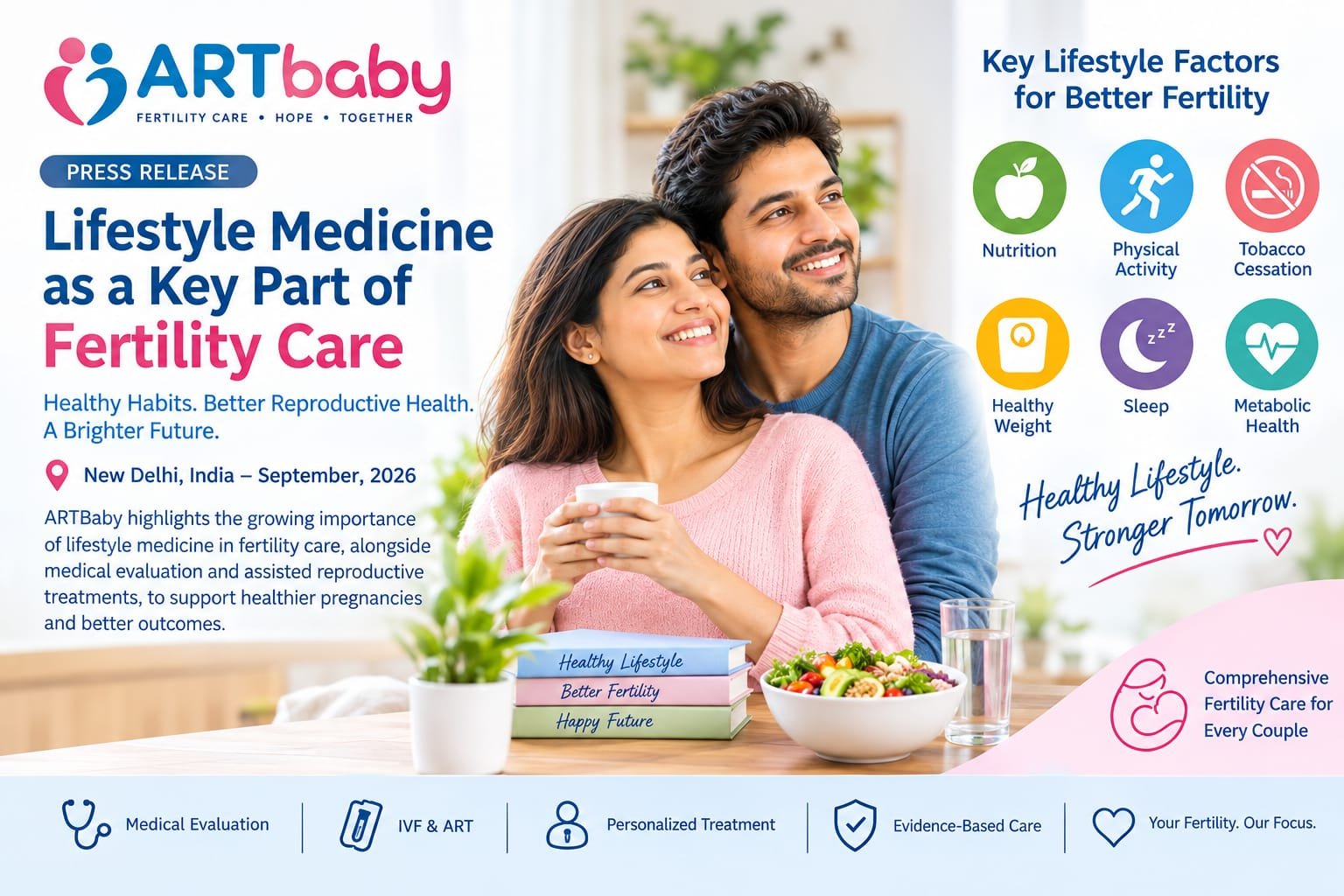
As infertility becomes an increasingly important reproductive-health concern in India, ARTBaby is highlighting the growing importance of lifestyle medicine as part of comprehensive fertility care. The approach focuses on identifying modifiable health factors, including nutrition, physical activity, tobacco use, body weight, sleep and metabolic health alongside established medical and assisted reproductive treatments.
The emphasis comes as international fertility guidance increasingly recognizes preconception health as an important component of infertility care. The World Health Organization’s first global guideline on infertility, issued in November 2025, recommends lifestyle interventions such as a healthy diet, physical activity and tobacco cessation for individuals and couples planning pregnancy.
Moving Beyond IVF Alone
According to ARTBaby, lifestyle medicine should not be viewed as an alternative to IVF or other fertility treatments. Instead, it can complement medical evaluation by addressing health factors that may influence reproductive function and pregnancy readiness.
Evidence indicates that smoking, unhealthy body weight, poor dietary patterns and other lifestyle factors can affect reproductive health in both women and men. However, the relationship between lifestyle modification and IVF outcomes is complex, and patients should not be given unrealistic expectations that lifestyle changes alone will guarantee pregnancy or improve live-birth rates.
“Fertility care should look at the patient as a whole rather than focusing only on an individual test or procedure,” said ARTBaby. “Lifestyle assessment can help identify modifiable factors while allowing fertility specialists to determine whether medical treatment, IVF or other interventions are required.”
Why It Matters for Indian Couples
India’s diverse population presents unique challenges in implementing healthy lifestyle practices. Long working hours, sedentary routines, changing dietary patterns, obesity, diabetes, tobacco exposure and stress can influence overall reproductive health.
Women with conditions such as PCOS may particularly benefit from individualized lifestyle management. International PCOS guidance recognizes healthy eating, regular physical activity and maintenance of a healthy weight as important components of overall management and quality of life.
For men, lifestyle assessment is also relevant. Smoking, alcohol consumption, obesity and certain environmental exposures have been associated with poorer semen parameters. A fertility evaluation should therefore include both partners rather than placing the responsibility for infertility primarily on women.
What Lifestyle-Focused Fertility Care Can Include
Depending on an individual’s medical history, fertility specialists may discuss:
- Balanced nutrition and appropriate weight management
- Regular, moderate physical activity
- Tobacco cessation
- Appropriate alcohol reduction or avoidance
- Sleep and stress management
- Management of diabetes, thyroid disorders and other metabolic conditions
- Review of medications and supplements
- Male reproductive-health assessment and semen analysis
- Preconception counseling
- Appropriate medical or assisted reproductive treatment when required
The latest European Society of Human Reproduction and Embryology (ESHRE) guidance similarly recommends a healthy diet and regular exercise for patients with unexplained infertility, while noting that evidence does not establish a particular diet or exercise programme as a guaranteed way to improve assisted-reproduction outcomes.
Personalization Remains Essential
ARTBaby emphasizes that lifestyle recommendations should be individualized rather than based on generic fertility diets, supplements or internet trends.
For some patients, improving metabolic health may be particularly important. Others may require immediate fertility treatment because of age-related fertility decline, diminished ovarian reserve, severe male-factor infertility, tubal disease or other medical conditions.
Recent ESHRE recommendations also stress individualized IVF care, including consideration of patient characteristics, treatment response and safety when planning ovarian stimulation.
Lifestyle medicine therefore represents one component of fertility care, not a substitute for timely diagnosis or evidence-based treatment.
ARTBaby’s Patient-Centered Approach
ARTBaby encourages couples to discuss lifestyle, medical history and reproductive goals openly with their fertility team. Early assessment can help identify potentially modifiable factors while avoiding unnecessary delays in patients who may benefit from fertility treatment.
As fertility medicine continues to evolve, the integration of preconception health, clinical diagnostics, individualized treatment and evidence-based reproductive technology may provide a more comprehensive approach to fertility care in India.
About ARTBaby:
ARTBaby is a fertility-care platform focused on providing patients with information and access to individualized assisted reproductive care. Its approach emphasizes informed decision-making, clinical evaluation and patient-centered fertility treatment.
- Disclaimer
This press release is intended for general educational and informational purposes only and does not constitute medical advice, diagnosis or a guarantee of fertility or IVF success. Lifestyle changes may support general and reproductive health, but their effect on fertility outcomes varies between individuals. Patients should consult a qualified fertility specialist before changing medications, starting supplements, undertaking significant weight-loss programs or making decisions about IVF or other fertility treatments.
