
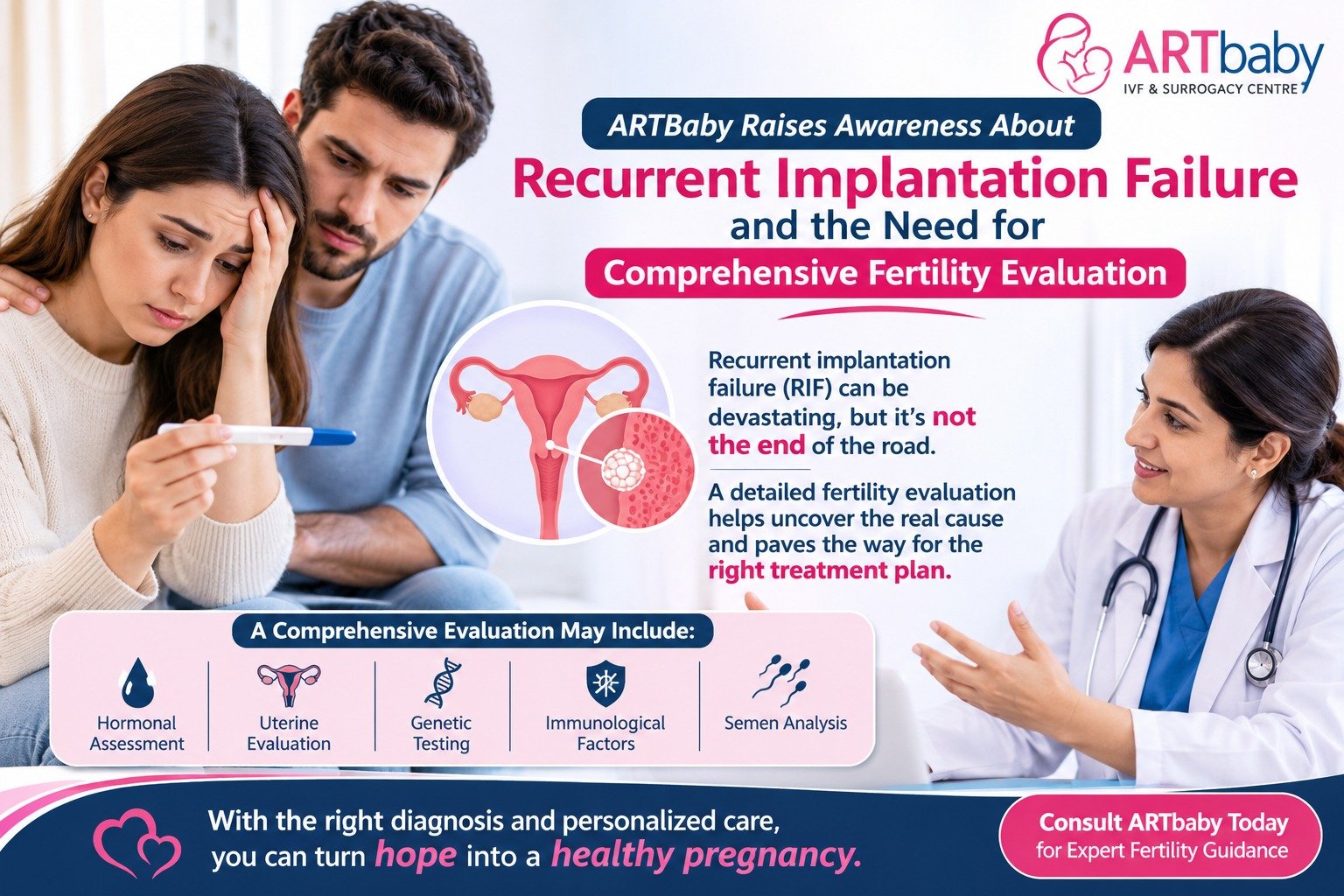
ARTBaby is raising awareness about recurrent implantation failure (RIF), an emotionally challenging situation in which repeated embryo transfers do not result in successful implantation. The fertility care provider emphasizes the importance of a comprehensive, individualized evaluation rather than immediately turning to multiple advanced tests or unproven treatments.
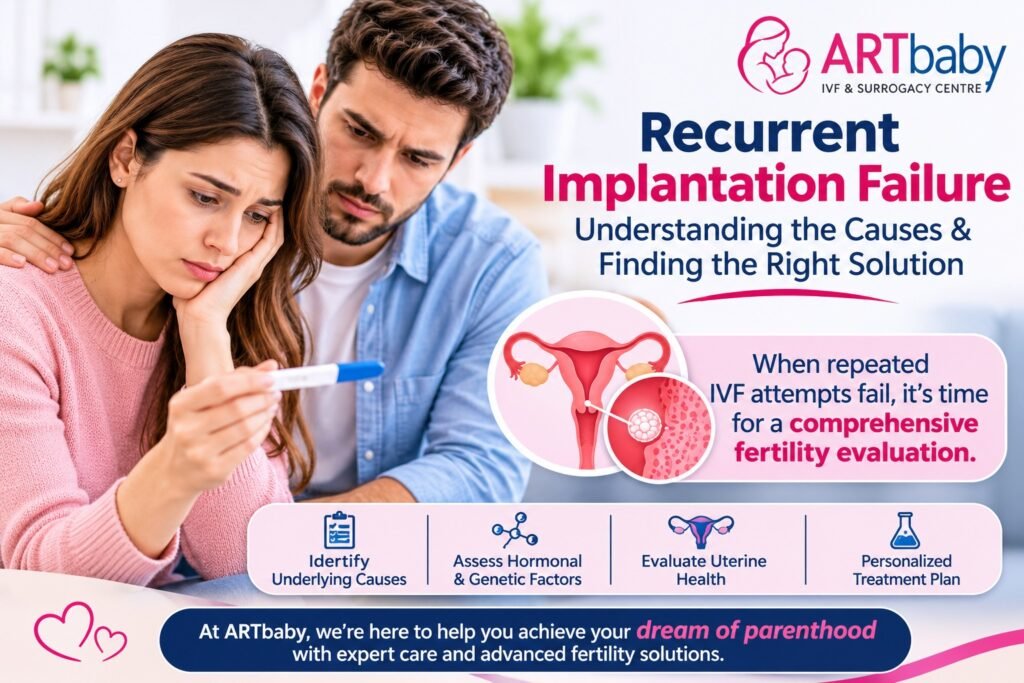
Implantation is a complex biological process involving the embryo, endometrium, uterine environment, and several maternal and paternal factors. According to the American Society for Reproductive Medicine (ASRM) 2026 committee opinion, there is still no universally accepted definition of RIF. ASRM currently describes RIF based on failure to achieve a positive pregnancy test after transferring the estimated number of good-quality blastocysts expected to provide a 95% cumulative chance of a positive test.
Why Repeated Embryo Transfer Failure Requires Careful Evaluation
A failed embryo transfer does not necessarily mean that a woman has a uterine problem. Embryo-related factors, particularly chromosomal abnormalities (aneuploidy), are considered an important contributor to implantation failure. Age-related aneuploidy can reduce an embryo’s potential for sustained implantation and live birth.
Other factors may also require consideration, including:
- Uterine cavity abnormalities, fibroids, polyps or adhesions
- Hydrosalpinx or other structural reproductive problems
- Endometrial or inflammatory conditions in selected patients
- Hormonal and metabolic factors
- Embryo quality and developmental potential
- Parental chromosomal abnormalities in appropriate cases
- Details of previous IVF cycles, including embryo stage and transfer conditions
According to ASRM recommending that evaluation of suspected RIF should begin with a detailed review of medical and reproductive history, imaging and previous IVF-cycle information. Where a potentially correctable factor is identified, treatment may be considered. If no clear cause is found, extensive testing is not necessarily appropriate, and many patients may still achieve pregnancy with subsequent embryo transfer.
Avoiding Unnecessary Fertility Testing
Growing awareness of RIF has also increased interest in tests marketed as ways to identify the “perfect” implantation window or immune causes of implantation failure. However, evidence for several such approaches remains limited.
The latest ASRM guidance states that routine endometrial receptivity testing, BCL-6 testing, sperm DNA fragmentation testing specifically for RIF, endometrial scratching and several immune-based interventions do not currently have sufficient evidence to be routinely recommended for RIF patients.
Similarly, ESHRE’s good-practice recommendations emphasize individualized assessment and distinguish between interventions that may be considered and those that are not recommended because of insufficient evidence.
This evidence-based approach is particularly relevant in India, where patients may encounter a wide range of fertility tests and treatment options. India’s Assisted Reproductive Technology (Regulation) Act, 2021 provides a national framework for the regulation and supervision of ART clinics and banks and emphasizes safe and ethical ART practice.
A Patient-Centered Approach to Recurrent Implantation Failure
ARTBaby emphasizes that RIF should not be approached as a single-test problem. A fertility specialist may need to review the complete clinical picture, including the patient’s age, reproductive history, uterine assessment, embryo characteristics, and previous treatment outcomes.
Patients should also understand that one unsuccessful embryo transfer does not automatically indicate recurrent implantation failure. The latest evidence supports avoiding premature labeling and unnecessary investigations.
Repeated unsuccessful treatment can also create significant psychological distress. Clear communication, realistic expectations, and compassionate counseling are therefore important components of fertility care.
“Every unsuccessful transfer can raise difficult questions for patients. The goal of a comprehensive evaluation should be to identify clinically meaningful factors while avoiding unnecessary tests and treatments,” notes the ARTBaby fertility care team.
For couples undergoing IVF in India, understanding the difference between evidence-based evaluation and experimental fertility add-ons can help them make more informed treatment decisions.
About ARTBaby
ARTBaby is committed to supporting individuals and couples through evidence-informed fertility care and patient education. Its approach focuses on individualized assessment, appropriate reproductive investigations and treatment planning based on each patient’s clinical circumstances.
Medical Disclaimer
This press release is intended for general educational and awareness purposes and does not constitute medical advice. Recurrent implantation failure can have multiple contributing factors, and no single investigation or treatment is appropriate for every patient. Fertility treatment decisions should be made in consultation with qualified reproductive medicine specialists based on individual medical history and available clinical evidence. IVF outcomes cannot be guaranteed.

