
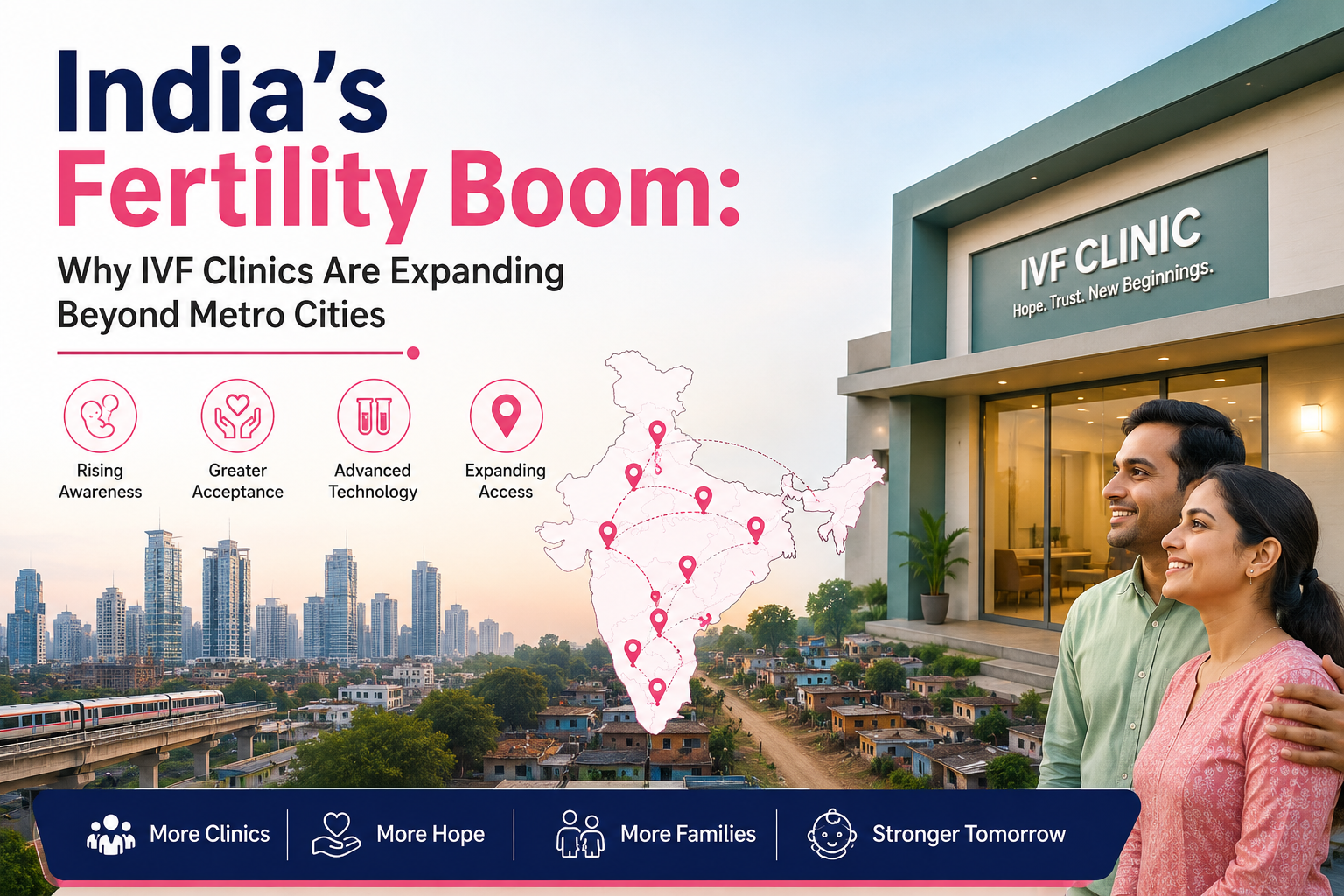
For years, advanced fertility treatment in India was largely concentrated in metropolitan cities such as Delhi, Mumbai, Bengaluru, Chennai, and Hyderabad. Couples living in smaller cities often travelled hundreds of kilometers for consultations, IVF procedures, and follow-up appointments.
Today, that landscape is changing rapidly.
India is experiencing a significant expansion in fertility care, with IVF clinics opening in Tier 2 and Tier 3 cities. This shift is driven by rising infertility rates, greater awareness, improved healthcare infrastructure, technological advancements, and supportive regulations under the Assisted Reproductive Technology (ART) Act. Industry forecasts also project strong growth in India’s fertility services market over the coming years as organized fertility networks continue expanding nationwide.
For patients, this means one important thing: high-quality fertility care is becoming more accessible than ever before.
Why Is India Witnessing a Fertility Boom?
Several social, medical, and economic factors are contributing to the growing demand for fertility services.
1. Delayed Parenthood
Many Indian couples are choosing to marry and start families later than previous generations due to:
- Career priorities
- Higher education
- Financial planning
- Urban lifestyles
Since female fertility naturally declines with age, especially after 35, delayed parenthood has increased the need for assisted reproductive treatments.
2. Lifestyle-Related Fertility Challenges
Modern lifestyles can affect reproductive health in both men and women.
Common contributing factors include:
- PCOS
- Endometriosis
- Obesity
- Diabetes
- Thyroid disorders
- Smoking and alcohol
- Chronic stress
- Poor sleep
- Environmental pollution
Male infertility has also become increasingly recognized, with sperm quality affected by lifestyle and environmental factors.
3. Greater Awareness about Fertility
A decade ago, infertility remained a sensitive topic in many families.
Today:
- Couples seek fertility advice earlier.
- Social media and digital health platforms have improved awareness.
- Fertility education has reduced myths surrounding IVF.
- More people understand that infertility can affect both partners.
Earlier diagnosis often improves treatment outcomes.
Why IVF Is Expanding Beyond Metro Cities
India’s fertility care ecosystem is undergoing one of its biggest transformations. Leading fertility providers are establishing centers in cities such as Meerut, Haldwani, Amritsar, Jamnagar, Patna, Prayagraj, and other emerging healthcare hubs, bringing advanced reproductive medicine closer to patients. Several factors are driving this expansion.
Better Healthcare Infrastructure
Tier 2 cities now offer:
- Modern hospitals
- Improved diagnostic laboratories
- Better imaging facilities
- Skilled fertility specialists
- Advanced embryology laboratories
These improvements make it possible to deliver IVF services with quality standards comparable to larger cities.
Reduced Travel Burden
Previously, couples often had to:
- Travel repeatedly for monitoring
- Take extended leave from work
- Arrange accommodation
- Manage additional travel expenses
With IVF services available closer to home, treatment becomes more convenient, less stressful, and easier to continue consistently.
Improved Affordability
Although IVF remains a specialized treatment, clinics in smaller cities may have lower operating costs, helping reduce overall treatment expenses while maintaining quality standards. This makes fertility care accessible to a wider population.
Growing Acceptance
Infertility is increasingly being recognized as a medical condition rather than a social stigma.
Local access to fertility specialists encourages couples to seek timely evaluation instead of delaying treatment because of embarrassment or misinformation.
Technology Is Supporting Expansion
Modern fertility care is no longer limited by geography.
Today’s IVF centers increasingly use:
- Digital patient records
- Teleconsultations
- Advanced ultrasound systems
- High-quality embryology laboratories
- Time-lapse embryo monitoring
- Cryopreservation facilities
- Improved laboratory quality control
These innovations help standardize care across multiple locations.
Government Regulations Are Improving Patient Confidence
India’s fertility sector has become more structured following implementation of the ART (Regulation) Act, 2021 and related regulations.
More recently, authorities have strengthened oversight by restricting the supply of key IVF laboratory consumables to registered ART clinics and sperm banks, reinforcing quality and patient safety.
For patients, choosing a registered fertility center is essential for receiving treatment that follows recognized legal and clinical standards.
The Rise of Fertility Care in Smaller Cities
The next phase of India’s fertility growth is expected to come from non-metro regions.
Driving factors include:
- Rising disposable income
- Better health insurance awareness
- Digital consultations
- Improved transportation
- Growing trust in fertility medicine
- Increased awareness among primary care doctors
Experts believe that future demand will increasingly come from Tier 2 and Tier 3 cities rather than metropolitan areas alone.
What This Means for Patients
Greater access to IVF allows couples to:
- Seek medical advice earlier
- Reduce treatment delays
- Lower travel-related stress
- Continue treatment without relocating
- Access modern reproductive technologies closer to home
The result is a more patient-centered fertility journey.
How ARTBaby Support Modern Fertility Care?
At ARTBaby, we understand that every fertility journey is unique.
Our approach combines:
- Personalised fertility evaluation
- Evidence-based treatment planning
- Experienced fertility specialists
- Modern IVF laboratory protocols
- Ethical and transparent counseling
- Compassionate patient support
Whether you are considering your first fertility consultation or exploring advanced IVF options, our goal is to provide care that is scientifically sound, transparent, and tailored to your individual needs.
Frequently Asked Questions (FAQs)
Are IVF clinics only available in metro cities?
No. Many reputable IVF centers now operate in Tier 2 and Tier 3 cities, improving access to fertility care across India.
Is IVF treatment equally effective outside metropolitan cities?
Success depends on factors such as maternal age, diagnosis, embryo quality, laboratory standards, and clinical expertise not simply the city’s size. Choosing a registered clinic with experienced specialists is important.
Why are more couples seeking fertility treatment today?
Delayed parenthood, lifestyle-related health conditions, improved awareness, and better access to specialized reproductive care have all contributed to rising demand.
How do I choose the right IVF clinic?
Look for:
- Registered ART clinic
- Experienced fertility specialists
- Modern embryology laboratory
- Transparent counseling
- Individualized treatment plans
- Ethical clinical practices
Final Thoughts
India’s fertility landscape is changing rapidly. Advanced reproductive care is no longer confined to metropolitan hospitals. The expansion of IVF clinics into Tier 2 and Tier 3 cities is improving access, reducing travel burdens, and helping more couples seek timely treatment.
As awareness grows and technology continues to advance, the focus is shifting from simply increasing the number of fertility centres to ensuring high-quality, ethical, and patient-centred care.
At ARTBaby, we are proud to be part of this evolving journey, supporting individuals and couples with evidence-based fertility care, compassionate guidance, and a commitment to helping them move closer to their dream of parenthood.
Disclaimer
This article is intended for educational and informational purposes only and should not be considered medical advice. Fertility treatment recommendations vary based on individual medical history, age, reproductive health, and diagnostic findings. Patients should consult a qualified fertility specialist for personalized evaluation and treatment planning.
